'A strong foreign exchange reserve is the best safety net against global spillovers.'

Political controversies aside, Twitter's business in India is expanding, and creating opportunities for Indians, reports Neha Alawadhi.

'We work with a very large restaurant base, we make sure that we're doing the right thing by them, and we're helping them grow because we'll grow only when they do.'

When the Delhi police served him a notice in May for a case involving tagging some political leaders' tweets as carrying manipulated media, a spirited Maheshwari said he was employed by Twitter Communications Private Limited, and not Twitter Inc, and, therefore, could not help them. The authorities were understandably not pleased.

The National Company Law Appellate Tribunal (NCLAT) on Wednesday closed insolvency proceedings against Oyo and one of its subsidiaries, and also disallowed the intervention of external parties including Federation of Hotel & Restaurant Associations of India (FHRAI). Industry body FHRAI said in May it has been allowed by the NCLAT to intervene on behalf of hotels in the Oyo unit insolvency case before the tribunal. The association had filed the application on behalf of its member hotels in India, who it said at the time are operational creditors suffering hugely on account of non-payments of debt by Oyo.

Alleging "anti-competitive practices" by Zomato and Swiggy, restaurant industry body National Restaurant Association of India (NRAI) on Monday said it has approached fair trade regulator Competition Commission of India (CCI) for a detailed probe against the food aggregators. Keeping the interests of restaurants in mind, NRAI on July 1 had filed information with the CCI, it said in a statement. The main issues highlighted by the association in the submission are bundling of services, data masking, and exorbitant commission charged, price parity agreements, deep discounting, including forcing restaurant partners to give discounts to maintain appropriate listing, exclusivity of listed restaurants, and violation of platform neutrality, vertical integration, and lack of transparency on the food ordering platforms.

As many as 81 per cent people support having rules for consumer e-commerce, but want more services-based platforms to have more clearly defined roles, a survey by community social media platform LocalCircles has found. The survey asked respondents to answer questions based on the recent draft Rules proposed by the ministry of consumer affairs. The responses found 81 per cent consumers wanting sales of products and services over electronic or digital networks to be governed by a set of electronic commerce rules.

Facebook removed 25 million pieces of content identified as 'spam,' 1.8 million pieces of content containing 'adult nudity and sexual activity', reports Neha Alawadhi.

From Twitter to Facebook to Spotify, everyone it seems is clambering aboard the social audio bandwagon. Neha Alawadhi reports.

India's consumer digital economy which was pegged at $85-90 billion in calendar year 2020, is expected to become a $800 billion market by 2030, according to reports released by consulting firm RedSeer at its flagship event Ground Zero 5.0. The digital economy includes 60 per cent of travel, 40 per cent non-grocery retail, 30 per cent of education, 25 per cent of food and beverages services and 6 per cent of pharma/grocery going through digital channels by calendar year 2030. Online retail is set to become the third-largest market by scale by CY30 with an annual gross merchandise value (GMV) of $350 billion in CY30, said RedSeer.

While Facebook said on Tuesday it will publish an interim report on July 2 as mandated by the IT rules, Google will publish its transparency report as required under the new IT Rules in India.

The submission was made by the UN Special Rapporteurs on the promotion and protection of the right to freedom of opinion and expression Irene Khan; on the rights to freedom of peaceful assembly and of association Clement Nyaletsossi Voule; and the right to privacy, Joseph Cannataci.
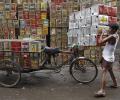
High inflation print is the price that the Reserve Bank of India (RBI) will have to pay to nurse a fragile growth back, say economists. Wholesale Price Index-based inflation rose to a record high of 12.94 per cent in May, aided by low base effect, but also because of higher fuel and commodity prices. Retail inflation, too, surprised by rising to 6.30 per cent, while the core inflation, which is the non-food and non-fuel component, rose to an 83-month high of 6.55 per cent. These numbers are much above RBI's upper limit of 6 per cent inflation target, but there is very little that the RBI can do at this moment.

Intelligent tools are being deployed to detect content pirated from OTT platforms.

Paytm will look to raise up to $1.5 billion as part of primary share sale, leading up to its initial public offering (IPO), which is planned for November, a person familiar with the developments said. The company is looking to file its draft red herring prospectus (DRHP) by July, according to sources. According to this person, though the details of the listing are being worked out, Paytm may take the qualified institutional buyer (QIB) route to list and issue fresh equity to raise funds.

As it readies for its initial public offering (IPO) later this year, digital payments firm Paytm is honing its strengths to remodel itself from being a payment wallet to becoming a financial services provider, and is working towards narrowing its losses, evident from its most recent Annual Report. Unlike many of its peers, Paytm has started expanding its merchant payment ecosystem. It has realised that though it can take the maximum share of the Unified Payment Interface (UPI) transactions, from a revenue generation point of view it will not have any impact.

Zerodha will not raise external funds now or in the future, because it is profitable and has zero debt.
The Reserve Bank of India (RBI) booked massive gains on its foreign currency sales and needed to provide much lesser for its reserves in 2020-21 (FY21), helping it to carve out a significant Rs 99,122-crore dividend for the government, revealed the RBI's annual report for FY21. By doing so, the central bank's risk buffers have reduced to the bare minimum, which may restrict some of RBI's scale of operations, and would likely hamper dividend payout for financial year 2021-22, said analysts. The annual accounts are for nine months ended March 31, 2021 since the RBI changed its accounting year from July-June to April-March from FY21.

Digital payments provider Paytm is all set to make its market debut as early as this year, with an aim to raise $3 billion (around Rs 22,000 crore). If successful, this could be the biggest initial public offering (IPO) by an Indian company, breaking Coal India's 2010 record of Rs 15,475 crore. According to media reports, the board of One97, parent company of Paytm, is all set to meet this Friday to formally approve the IPO plan.
 © 2025 Rediff.com - Investor Information - Advertise with us - Disclaimer - Privacy Policy - Sitemap - Feedback - About us - Terms of use - Grievances